Close
Close

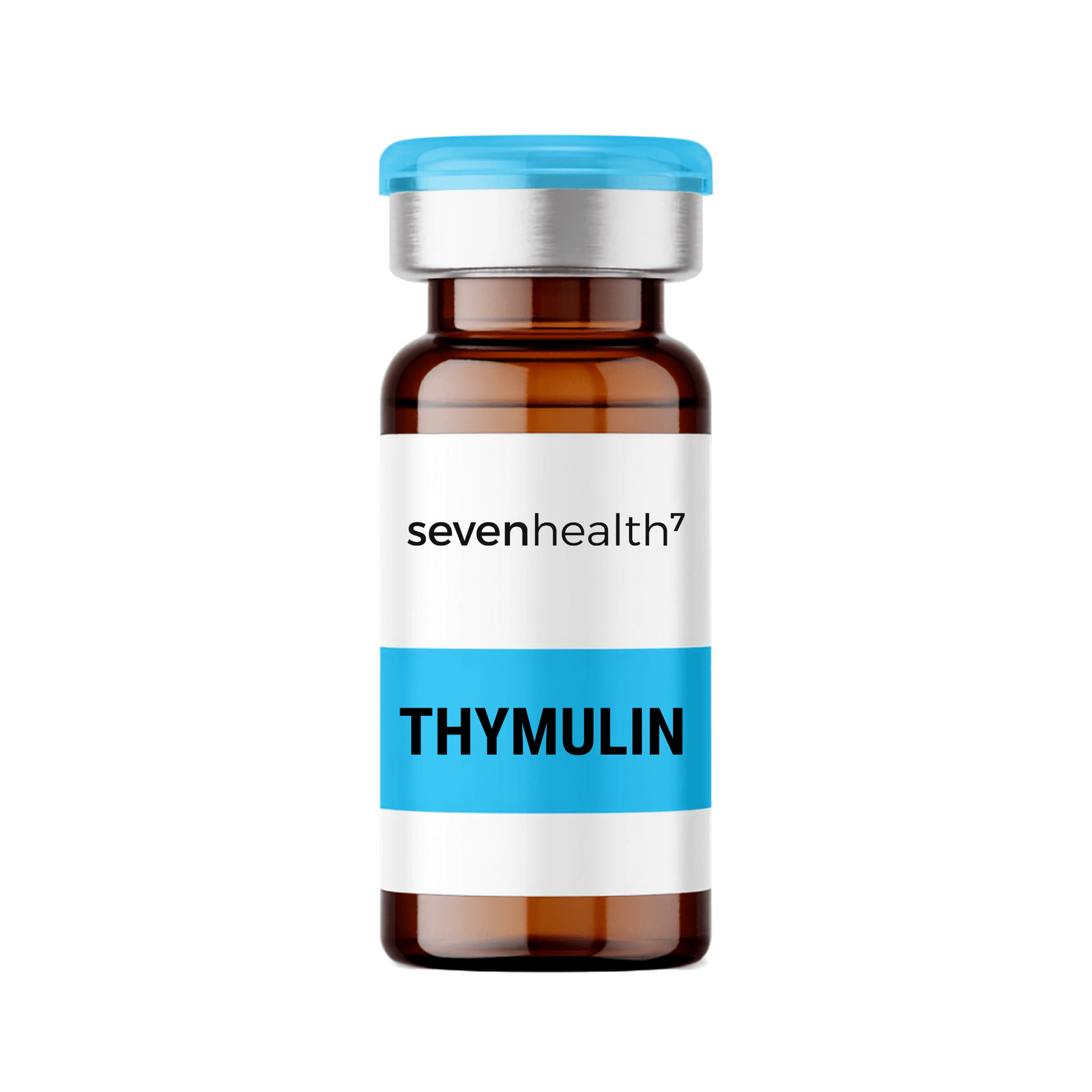
Thymulin 3-Month Membership Program

$1,150.00

4.9 Avg. Rating

1000+ Reviews

Thymulin is a peptide that patients sometimes ask about when they’re exploring immune-supportive options, particularly those interested in the connection between nutrition and immune health. Because Thymulin has a genuinely interesting and well-documented relationship with a specific nutrient, zinc, it’s often discussed differently than many other immune-focused peptides.
Thymulin is a naturally occurring peptide hormone produced by cells in the thymus gland, the organ responsible for helping your immune system’s T cells mature and develop properly. What makes Thymulin distinctive is that it only becomes biologically active when it’s bound to zinc. Without adequate zinc, the peptide is present in an inactive form, meaning zinc status directly determines whether Thymulin can do its job.
Patients commonly ask about Thymulin because this zinc relationship offers a clear, well-established biological story: as we age, the thymus gland naturally shrinks and produces less Thymulin, contributing to a general decline in immune function sometimes called immunosenescence. Because zinc deficiency independently impairs Thymulin’s activity, some patients are curious whether addressing zinc status alongside Thymulin therapy might offer more complete immune support.
It’s important for patients to understand that despite this well-documented biological relationship, the clinical research base specifically testing Thymulin therapy in humans remains quite limited, with only a small number of interventional studies conducted, and some of that research has not been repeated or expanded upon in the decades since. This page provides an honest picture of that evidence.
To understand how Thymulin works, picture your thymus gland as a specialized school that trains young immune cells, called thymocytes, to become mature, functional T cells capable of recognizing and responding to threats. Thymulin acts like one of the key instructors in this school, helping guide thymocytes through this maturation process. The interesting twist is that this instructor can’t actually teach without a specific tool: zinc. Thymulin only becomes biologically active when a zinc ion binds to it, changing its shape into a form that can properly interact with immune cells. Without enough zinc, Thymulin remains in an inactive form, even if the thymus gland is producing it normally. This is why researchers describe zinc status as directly controlling whether the body’s natural Thymulin signal can actually be heard. Beyond its direct role in T-cell development, Thymulin has also been studied for potential effects at the intersection of the immune and nervous systems, sometimes described as the thymus-neuroendocrine axis, reflecting how immune signals and hormone-related signals can influence one another.
  • Has shown promise in research for supporting T-cell maturation and immune system development, based on laboratory and animal studies
  • Is currently being studied for its potential role in addressing age-related immune decline, given the natural reduction in Thymulin production that occurs with age
  • May be of particular relevance to patients with suboptimal zinc status, since Thymulin’s activity is directly dependent on adequate zinc levels
  • Is being explored in early research for potential anti-inflammatory effects through related peptide analogues, though this remains a developing area
Because the direct human clinical trial evidence for Thymulin therapy itself is quite limited, these potential benefits should be understood as grounded in a well-established biological mechanism, but not yet confirmed through extensive human research.
Patients who commonly ask about Thymulin include those interested in:
  • Immune support, particularly patients interested in age-related immune decline and general immune resilience
  • Healthy aging, given the natural decline in thymic hormone production, including Thymulin, that occurs with age
  • Nutrition-informed immune health, for patients interested in the specific connection between zinc status and immune function
  • Wellness optimization, for patients working with a provider on a broader immune and healthy aging plan
Thymulin is not appropriate for everyone, and given the limited human clinical trial base, it requires an especially honest conversation with a licensed provider about realistic expectations before starting.
Thymulin’s biological role has been well documented in laboratory and human physiological research, particularly its zinc-dependence. One frequently cited human study demonstrated that inducing mild zinc deficiency in volunteers directly decreased Thymulin activity along with certain immune cell measures, and that these changes reversed when zinc was restored. This research provides strong evidence for the underlying biological relationship between zinc and Thymulin function. However, it’s important to be transparent that direct human clinical trials testing Thymulin as an administered therapy are quite limited. Available reviews note that the clinical evidence base for Thymulin therapy itself remains thin, citing a single older interventional human trial that has not been meaningfully replicated in the decades since. Animal research has explored whether administered Thymulin can help restore immune function in aged or thymus-compromised models, offering some encouraging findings, but this has not translated into a robust modern human clinical trial base. Because of this gap between the well-established underlying biology and the limited direct clinical trial evidence, Thymulin should be understood as a compound with a genuinely compelling scientific rationale, but one where human research on administered therapy remains an area needing further development. Ongoing research continues to explore its potential role in immune support and healthy aging, and individual responses can be expected to vary.
Available research describes Thymulin’s general safety profile as favorable, though the limited scope of direct human clinical trials means this should be understood as an early, developing picture rather than a fully established safety record. As with any peptide with a smaller evidence base, ongoing medical supervision is important. Because Thymulin affects immune signaling, patients with autoimmune conditions should have a particularly careful conversation with their provider before considering this therapy, since immune-modulating compounds can interact with these conditions in ways that require individualized assessment. This is not a complete list of contraindications, and only a licensed provider reviewing your full medical history can determine whether Thymulin is a safe and appropriate option for you. Because Thymulin’s activity depends on adequate zinc status, your provider may also discuss zinc levels or supplementation as part of a comprehensive approach. Patients should follow their provider’s guidance closely throughout treatment.

What does Thymulin do?

Thymulin is studied for its role in supporting T-cell maturation and immune system development, with its activity directly dependent on adequate zinc levels.

Is Thymulin FDA-approved?

No. Thymulin does not have FDA approval and remains a research-stage compound with limited direct human clinical trial data.

How long before I may notice changes?

Because human clinical trial data on administered Thymulin is limited, there is no well-established timeline for expected results, and your provider can help set realistic expectations.

Is it an injection?

Thymulin has typically been studied as a subcutaneous or intramuscular injection in the available research

Can it be combined with other peptides?

This should be discussed with your provider, who can evaluate your full treatment plan and goals.

Can it be combined with GLP-1 medications?

This is not a well-studied combination, and should be discussed individually and carefully with your provider.

Will I need lab work?

Your provider may recommend zinc level testing, given the well-established relationship between zinc status and Thymulin activity.

Who should avoid this peptide?

Patients with autoimmune conditions should have a particularly careful conversation with their provider. A full medical evaluation will help determine appropriateness.

How long do patients typically remain on therapy?

Because the human evidence base is limited, treatment plans should be individualized and closely supervised rather than open-ended.

Is a consultation required?

Yes. A telehealth consultation with a licensed medical provider is required before starting Thymulin or any peptide therapy at SevenHealth.
Every peptide treatment program at SevenHealth is built around comprehensive, individualized medical care. When you begin therapy, your program includes:
  • An initial telehealth medical history and comprehensive evaluation with a licensed medical provider
  • Review of previous laboratory results when available, or recommendations for laboratory testing when medically appropriate
  • Personalized treatment recommendations based on your medical history and goals
  • Three months of prescribed peptide therapy when medically appropriate
  • A customized dosing and titration schedule specific to your prescribed peptide
  • A comprehensive follow-up appointment approximately three months after starting treatment
  • Review of progress, discussion of results, treatment adjustments if medically appropriate, and continued provider guidance
  • Ongoing provider oversight throughout your treatment program
  • No additional fees for appointments included within the treatment program
  • No additional fees for laboratory review as part of your treatment
Our goal is to make your experience with peptide therapy simple, transparent, and medically supervised from your very first consultation through every follow-up appointment. Given the limited clinical trial base for Thymulin, your provider will place particular emphasis on honest conversation about realistic expectations.
Patients choose SevenHealth because we focus on individualized, medically supervised care rather than one-size-fits-all protocols. Every treatment plan is built around your specific health history and goals, and every prescription is overseen by a licensed medical provider from start to finish. We work with FDA-registered 503A U.S. compounding pharmacies that follow applicable quality standards, so you can feel confident in the source and handling of your prescribed peptide therapy. Dosing is guided by your provider, not guesswork, and every program includes a three-month follow-up to review your progress and make adjustments if needed. We also believe in transparent pricing and honest education. There are no surprise appointment fees or lab review fees hidden within your treatment program, and we believe patients deserve an accurate picture of where the science currently stands.
  • Thymulin is a naturally occurring thymic peptide that requires zinc to become biologically active.
  • It plays a well-documented role in T-cell maturation, and its activity declines both with age and with zinc deficiency.
  • Direct human clinical trial evidence for Thymulin as an administered therapy remains quite limited.
  • Available safety data appears favorable, though the overall human evidence base is still developing.
  • Patients with autoimmune conditions should have a particularly careful conversation with their provider.
  • Zinc status is an important consideration alongside Thymulin therapy, given their well-established biological relationship.
  • This peptide requires a full medical evaluation and ongoing supervision.
  • SevenHealth includes an initial evaluation, personalized dosing, lab review, and a three-month follow-up in every treatment program.

Educational Disclaimer

This information is provided for educational purposes only and is not intended to diagnose, treat, cure, or prevent any disease. Peptide therapy should only be used under the supervision of a licensed healthcare provider after an appropriate medical evaluation. Individual results may vary.

$100 OFF GLP-1 Injectable Plans for New Members ! CODE: