Close
Close

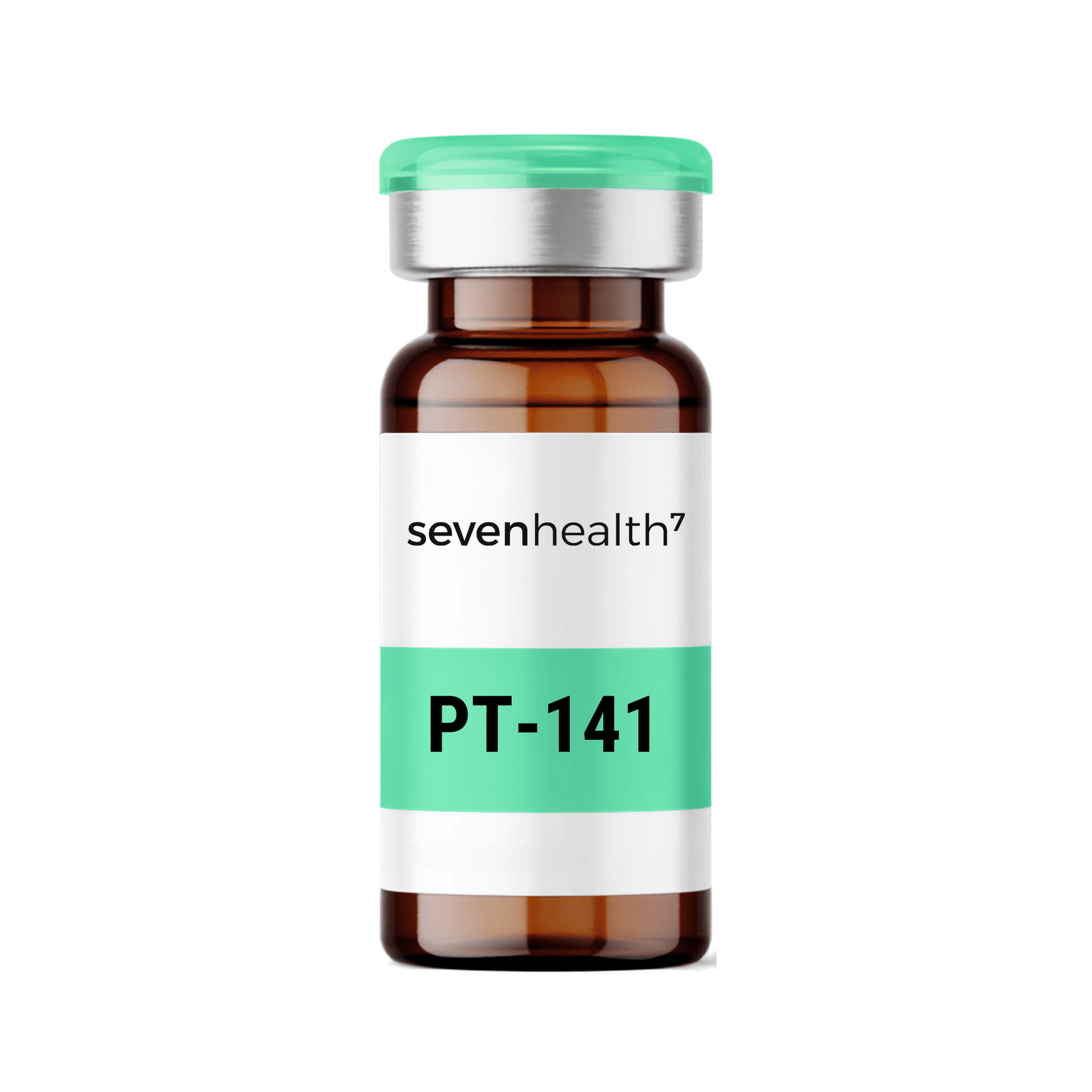
PT-141 3-Month Membership Program

$1,150.00

4.9 Avg. Rating

1000+ Reviews

PT-141, also known as bremelanotide, is a peptide many patients ask about when they’re dealing with low sexual desire or difficulty with arousal. Because sexual health is deeply personal and can affect quality of life and relationships, patients often want a clear, honest explanation of what this peptide actually does before considering it.
PT-141 works differently from many other sexual health treatments. Rather than acting on blood flow in the body, it works through pathways in the brain that are involved in sexual desire and arousal. It was developed from earlier research on a related melanocortin peptide, and over time was refined specifically for its effects on sexual response.
An important fact patients should know is that PT-141 does have an FDA-approved use: it is approved, under the brand name Vyleesi, for premenopausal women with a specific diagnosis called hypoactive sexual desire disorder, or HSDD, which refers to a persistent, distressing lack of sexual desire not explained by another medical condition or medication. Use in men, and use for other indications, is considered off-label, meaning it falls outside that specific FDA-approved use, even though it has been studied and used clinically in these contexts as well.
Patients commonly ask about PT-141 because it offers a different mechanism than traditional options, and many are looking for something that addresses desire and interest, not just physical response. As with any therapy in this category, it’s important to have a full, honest conversation with a licensed provider about whether it’s appropriate for your specific situation.
To understand how PT-141 works, it helps to separate two different parts of sexual response: the physical, mechanical part (like blood flow) and the mental, motivational part (desire and interest). Many well-known treatments for sexual dysfunction work on the physical side, helping increase blood flow to support physical response. PT-141 works on the other side of that equation. It activates a pathway in the brain, in an area involved in regulating desire and motivation. Think of it like adjusting the “interest dial” in the brain rather than working on the plumbing. Because desire and arousal are closely connected, some patients notice effects on both, but PT-141’s primary target is this central, brain-based pathway rather than local blood flow. This is part of why PT-141 is discussed differently from PDE5 inhibitors, a category of medication that works primarily on blood vessels. Some patients and providers explore using both approaches together, since they work through different mechanisms, though this should always be an individualized decision made with your provider.
  • May help support sexual desire by acting on brain pathways associated with arousal and motivation, particularly in women with diagnosed HSDD, where it carries FDA approval
  • Has shown promise in research for men experiencing low libido or difficulty with arousal, though this use is off-label and less extensively studied than the approved use in women
  • May be used alongside other approaches for some patients, since its brain-based mechanism differs from blood-flow-focused treatments
  • Is currently being studied for its role in supporting sexual response in patients who have not had success with other treatment options
Individual results vary, and PT-141 should be discussed as part of a broader, individualized conversation about sexual health with your provider.
Patients who commonly ask about PT-141 include those interested in:
  • Sexual wellness support, particularly women diagnosed with hypoactive sexual desire disorder (HSDD), where PT-141 carries FDA approval
  • Off-label support for low libido or arousal difficulty in men, particularly those who have not had the response they hoped for with other treatment options
  • Wellness optimization, for patients working with a provider on broader sexual health and intimacy goals
PT-141 is not appropriate for everyone. It should never be started without a proper medical evaluation, and your provider will help determine whether this is a reasonable option based on your health history, current medications, and specific goals.
PT-141 has a more established research base than many peptides discussed in wellness settings, largely because of its path to FDA approval. Clinical trials in premenopausal women with HSDD demonstrated meaningful improvements in measures of sexual desire, which supported its 2019 FDA approval as Vyleesi for that specific population. Research in men has explored PT-141 for erectile difficulty and low libido, including studies looking at its use alongside other erectile dysfunction medications. Some of this research has shown promising responses, particularly in men who had not responded well to other treatment categories. However, this use in men remains off-label, meaning it has not gone through the same FDA approval process for that specific population, and the overall body of research in men is smaller than the research supporting its approved use in women. It’s important to be transparent that individual responses to PT-141 vary considerably, and ongoing research continues to refine understanding of who is most likely to benefit, at what dose, and through what route of administration. Compounded versions of PT-141, which may be used in some clinical settings, are not the same as the FDA-approved product and can differ in formulation, so this distinction is worth discussing with your provider.
The most commonly reported side effect of PT-141 is nausea, which tends to be most noticeable with the first dose and often decreases with continued use. Other reported effects include flushing, headache, and temporary increases in blood pressure, which is part of why patients with certain cardiovascular conditions need a careful evaluation before starting this therapy. Because PT-141 works on brain pathways related to desire and arousal, it is not appropriate for everyone. Patients with uncontrolled high blood pressure or certain cardiovascular conditions may not be suitable candidates. This is not a complete list of contraindications, and only a licensed provider reviewing your full medical history can determine whether PT-141 is a safe and appropriate option for you. Medical supervision matters throughout treatment, not just at the start. Following your prescribed dosing schedule, attending follow-up appointments, and reporting any side effects, especially any significant changes in blood pressure symptoms, headache, or unusual reactions, are important parts of using this therapy safely.

What does PT-141 do?

PT-141 works on brain pathways involved in sexual desire and arousal, which is different from treatments that work primarily on blood flow.

Is PT-141 FDA-approved?

Yes, for a specific use: it is FDA-approved as Vyleesi for premenopausal women with hypoactive sexual desire disorder (HSDD). Use in men or for other purposes is considered off-label.

How long before I may notice changes?

Some patients notice effects within the same session it’s used, since it’s typically taken on an as-needed basis rather than daily.

Is it an injection?

The FDA-approved form is a subcutaneous injection. Some compounded formulations, such as nasal sprays, may also be available through certain providers, though these differ from the approved product.

Can it be combined with other peptides?

This should be discussed with your provider, who can evaluate your full treatment plan and any potential interactions.

Can it be combined with GLP-1 medications?

In some cases, yes. Your provider can help determine whether this combination is appropriate for your specific health picture.

Will I need lab work?

Your provider may recommend baseline evaluation, particularly related to blood pressure and cardiovascular health, before starting.

Who should avoid this peptide?

Patients with uncontrolled high blood pressure or certain cardiovascular conditions may not be appropriate candidates. A full medical evaluation will help determine this.

How long do patients typically remain on therapy?

PT-141 is generally used on an as-needed basis rather than continuously, and your provider will help you understand an appropriate plan for your situation.

Is a consultation required?

Yes. A telehealth consultation with a licensed medical provider is required before starting PT-141 or any peptide therapy at SevenHealth.
Every peptide treatment program at SevenHealth is built around comprehensive, individualized medical care. When you begin therapy, your program includes:
  • An initial telehealth medical history and comprehensive evaluation with a licensed medical provider
  • Review of previous laboratory results when available, or recommendations for laboratory testing when medically appropriate
  • Personalized treatment recommendations based on your medical history and goals
  • Three months of prescribed peptide therapy when medically appropriate
  • A customized dosing and titration schedule specific to your prescribed peptide
  • A comprehensive follow-up appointment approximately three months after starting treatment
  • Review of progress, discussion of results, treatment adjustments if medically appropriate, and continued provider guidance
  • Ongoing provider oversight throughout your treatment program
  • No additional fees for appointments included within the treatment program
  • No additional fees for laboratory review as part of your treatment
Our goal is to make your experience with peptide therapy simple, transparent, and medically supervised from your very first consultation through every follow-up appointment. You will always know what to expect, what you’re paying for, and who to reach out to with questions along the way.
Patients choose SevenHealth because we focus on individualized, medically supervised care rather than one-size-fits-all protocols. Every treatment plan is built around your specific health history and goals, and every prescription is overseen by a licensed medical provider from start to finish. We work with FDA-registered 503A U.S. compounding pharmacies that follow applicable quality standards, so you can feel confident in the source and handling of your prescribed peptide therapy. Dosing is guided by your provider, not guesswork, and every program includes a three-month follow-up to review your progress and make adjustments if needed. We also believe in transparent pricing. There are no surprise appointment fees or lab review fees hidden within your treatment program, so you always know what you’re paying for.
  • PT-141 (bremelanotide) works on brain pathways related to sexual desire and arousal, rather than blood flow.
  • It carries FDA approval as Vyleesi for premenopausal women with HSDD; use in men is considered off-label.
  • Clinical research supports its approved use, with a smaller but promising body of research for off-label use in men.
  • The most common side effect is nausea, which often decreases with continued use.
  • Patients with uncontrolled blood pressure or certain cardiovascular conditions may not be appropriate candidates.
  • Compounded formulations differ from the FDA-approved product, and this distinction is worth discussing with your provider.
  • This therapy requires a full medical evaluation and ongoing supervision.
  • SevenHealth includes an initial evaluation, personalized dosing, lab review, and a three-month follow-up in every treatment program.

Educational Disclaimer

This information is provided for educational purposes only and is not intended to diagnose, treat, cure, or prevent any disease. Peptide therapy should only be used under the supervision of a licensed healthcare provider after an appropriate medical evaluation. Individual results may vary.

$100 OFF GLP-1 Injectable Plans for New Members ! CODE: