Close
Close

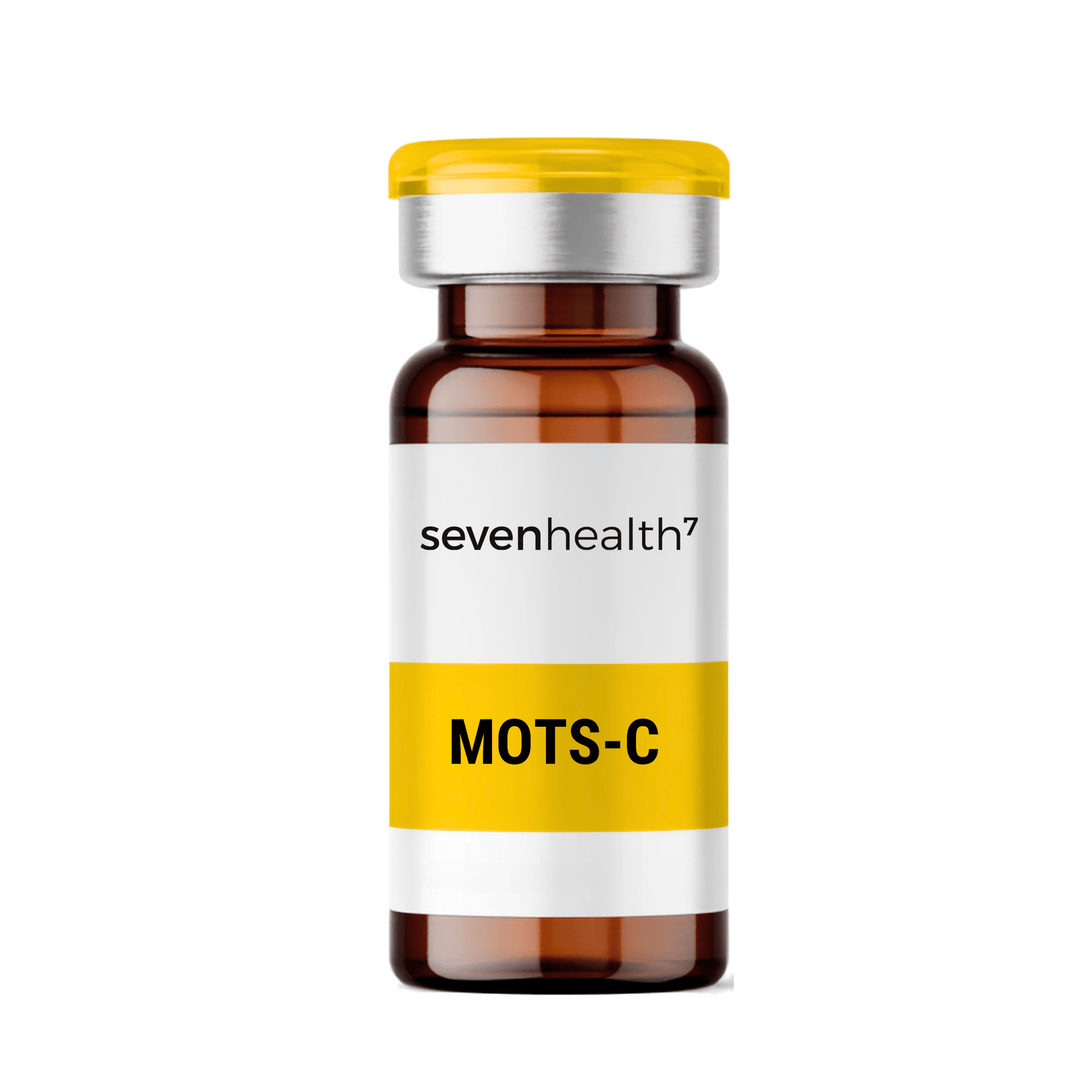
MOTS-C 3-Month Membership Program

$2,250.00

4.9 Avg. Rating

1000+ Reviews

MOTS-C is a peptide that patients sometimes ask about after hearing it described as an “exercise mimetic,” meaning a compound studied for its potential to replicate some of the cellular effects of physical exercise. Because interest in metabolism, energy, and healthy aging continues to grow, MOTS-C has become a topic of conversation in that space, even though it remains a relatively new and still-developing area of research.
What makes MOTS-C biologically unusual is where it comes from. Most peptides and proteins in your body are encoded by your main genetic material, found in the nucleus of your cells. MOTS-C, however, is encoded within your mitochondria, the small structures inside your cells often described as their “power plants.” This mitochondrial origin is part of why researchers believe MOTS-C may act as a signal that communicates your cells’ energy status to the rest of the body.
Patients commonly ask about MOTS-C because early research has connected it to processes like insulin sensitivity, fat metabolism, and physical performance, particularly because the body naturally increases MOTS-C levels during exercise. This has made it a peptide of interest for patients curious about metabolic health and healthy aging.
It’s important to understand that MOTS-C remains an early-stage research compound. It does not currently have FDA approval, and its regulatory status for pharmacy compounding has changed over time and continues to be actively reviewed. Because this landscape is evolving, your provider is the best source for current, accurate information on availability at the time of your consultation.
To understand how MOTS-C works, picture your mitochondria as tiny power plants inside your cells, and picture MOTS-C as a messenger that reports back on how well those power plants are running. When your cells experience physical stress, such as during exercise, your body naturally increases its production of MOTS-C, which then travels to the nucleus of cells and to other parts of the body to help coordinate an appropriate metabolic response. Researchers believe MOTS-C does this largely by activating a cellular energy sensor called AMPK, which acts like a thermostat for your cells, helping to regulate how they use fuel and respond to periods of high energy demand or stress. This is part of why MOTS-C has been described as an exercise mimetic, since activating this same pathway is one of the ways physical exercise itself is thought to benefit metabolism. Because this mechanism connects mitochondrial health, exercise physiology, and metabolic regulation, researchers have studied MOTS-C’s potential relevance to insulin sensitivity, fat metabolism, and other aspects of metabolic health, primarily in laboratory and animal models so far.
  • Is currently being studied for its potential role in supporting insulin sensitivity and healthy glucose metabolism, based primarily on animal research
  • Has shown promise in early research related to fat metabolism and body composition, though human clinical trial data remains very limited
  • May be of interest in research related to physical performance and exercise capacity, given MOTS-C’s natural increase during exercise
  • Is being explored for its potential relevance to bone health and other aspects of metabolic aging, an area of ongoing preclinical study
Because human clinical trial data on MOTS-C remains very limited, with no completed large-scale human efficacy trials in the published literature, these potential benefits should be understood as promising, early-stage research findings rather than proven, established outcomes.
Patients who commonly ask about MOTS-C include those interested in:
  • Metabolic health support, particularly patients interested in insulin sensitivity and glucose metabolism
  • Healthy aging, given MOTS-C’s studied relationship to mitochondrial function, which tends to decline with age
  • Athletic performance interest, for patients curious about the exercise mimetic research, though this remains an early-stage area
  • Wellness optimization, for patients working with a provider on a broader metabolic and healthy aging plan
MOTS-C is not appropriate for everyone, and given the limited human research currently available, it requires a thorough and honest conversation with a licensed provider about realistic expectations before starting.
MOTS-C was first identified in 2015 and has since become one of the more actively studied mitochondrial-derived peptides in laboratory and animal research. Animal studies have explored its relationship to insulin sensitivity, showing improvements in glucose regulation and reduced fat accumulation in certain animal models, along with effects on physical performance across different ages. It’s important to be transparent that human clinical trial data on MOTS-C specifically remains very limited. As of now, there is no completed, published human efficacy trial for unmodified MOTS-C itself, and no active regulatory application is in progress for the peptide. A related engineered analog has been studied in early-phase human trials for a different specific purpose, but this is a distinct compound from MOTS-C itself. MOTS-C’s regulatory status for pharmacy compounding has also evolved over time. It was previously restricted from compounding due to FDA safety concerns, and more recently that restriction was lifted while the FDA continues to formally evaluate whether it should be permitted for compounding going forward. Because this regulatory picture is actively changing, and because human research remains in an early stage, your provider is the best source for current, accurate information about both the science and the availability of this peptide.
Available research on MOTS-C describes it as generally well tolerated in the studies conducted so far, with reported effects including mild injection site reactions, occasional fatigue, and transient changes in appetite. However, because comprehensive human safety data remains limited, and because larger, longer-term studies have not been completed, this should be approached with appropriate caution. Because MOTS-C is studied for its effects on insulin sensitivity and glucose metabolism, patients with diabetes or other blood sugar-related conditions require particularly close monitoring to help avoid low blood sugar. This is not a complete list of contraindications, and only a licensed provider reviewing your full medical history can determine whether MOTS-C is a safe and appropriate option for you. Ongoing medical supervision is especially important given the still-evolving safety, research, and regulatory picture surrounding MOTS-C. Patients should never source or use this peptide outside of a properly supervised medical relationship.

What does MOTS-C do?

MOTS-C is studied for its potential role in supporting insulin sensitivity, fat metabolism, and mitochondrial energy signaling, sometimes described as an exercise mimetic.

Is MOTS-C FDA-approved?

No. MOTS-C does not have FDA approval for any use, and its regulatory status for pharmacy compounding has changed over time and continues to be actively reviewed.

How long before I may notice changes?

Responses vary considerably, and because human clinical trial data is very limited, there is no well-established timeline for expected results.

Is it an injection?

Yes, MOTS-C is typically administered as a subcutaneous injection.

Can it be combined with other peptides?

This should be discussed with your provider, who can evaluate your full treatment plan and goals.

Can it be combined with GLP-1 medications?

This should be discussed individually and carefully with your provider, particularly given MOTS-C’s studied effects on blood sugar regulation.

Will I need lab work?

Your provider may recommend baseline metabolic and glucose-related lab testing as part of a thorough, individualized approach to this peptide.

Who should avoid this peptide?

Patients with diabetes or other blood sugar-related conditions require particularly close monitoring. A full medical evaluation will help determine appropriateness.

How long do patients typically remain on therapy?

Treatment length varies by individual goals, and given the evolving evidence base, your provider will help determine a reasonable, individualized plan.

Is a consultation required?

Yes. A telehealth consultation with a licensed medical provider is required before starting MOTS-C or any peptide therapy at SevenHealth.
Every peptide treatment program at SevenHealth is built around comprehensive, individualized medical care. When you begin therapy, your program includes:
  • An initial telehealth medical history and comprehensive evaluation with a licensed medical provider
  • Review of previous laboratory results when available, or recommendations for laboratory testing when medically appropriate
  • Personalized treatment recommendations based on your medical history and goals
  • Three months of prescribed peptide therapy when medically appropriate
  • A customized dosing and titration schedule specific to your prescribed peptide
  • A comprehensive follow-up appointment approximately three months after starting treatment
  • Review of progress, discussion of results, treatment adjustments if medically appropriate, and continued provider guidance
  • Ongoing provider oversight throughout your treatment program
  • No additional fees for appointments included within the treatment program
  • No additional fees for laboratory review as part of your treatment
Our goal is to make your experience with peptide therapy simple, transparent, and medically supervised from your very first consultation through every follow-up appointment. Given the evolving research and regulatory picture surrounding MOTS-C, your provider will keep you informed of current availability and realistic expectations throughout your care.
Patients choose SevenHealth because we focus on individualized, medically supervised care rather than one-size-fits-all protocols. Every treatment plan is built around your specific health history and goals, and every prescription is overseen by a licensed medical provider from start to finish. We work with FDA-registered 503A U.S. compounding pharmacies that follow applicable quality standards, so you can feel confident in the source and handling of your prescribed peptide therapy, to the extent current regulations allow. Dosing is guided by your provider, not guesswork, and every program includes a three-month follow-up to review your progress and make adjustments if needed. We also believe in transparent pricing and honest education. There are no surprise appointment fees or lab review fees hidden within your treatment program, and we believe in giving patients a clear, accurate picture of where the science and regulatory landscape currently stand.
  • MOTS-C is a peptide encoded within mitochondrial DNA, studied for its role in metabolism, insulin sensitivity, and exercise physiology.
  • It’s sometimes described as an exercise mimetic because the body naturally increases MOTS-C levels during physical activity.
  • Most existing research comes from animal and laboratory studies, with no completed large-scale human efficacy trials published to date.
  • Its FDA regulatory status for compounding has changed recently and continues to be actively reviewed.
  • Patients with diabetes or blood sugar-related conditions require particularly close monitoring if considering this peptide.
  • Available safety data suggests mild side effects, but long-term human safety information remains limited.
  • This peptide requires an especially thorough, honest conversation with your provider given the current state of the evidence.
  • SevenHealth includes an initial evaluation, personalized dosing, lab review, and a three-month follow-up in every treatment program.

Educational Disclaimer

This information is provided for educational purposes only and is not intended to diagnose, treat, cure, or prevent any disease. Peptide therapy should only be used under the supervision of a licensed healthcare provider after an appropriate medical evaluation. Individual results may vary.

$100 OFF GLP-1 Injectable Plans for New Members ! CODE: