Close
Close

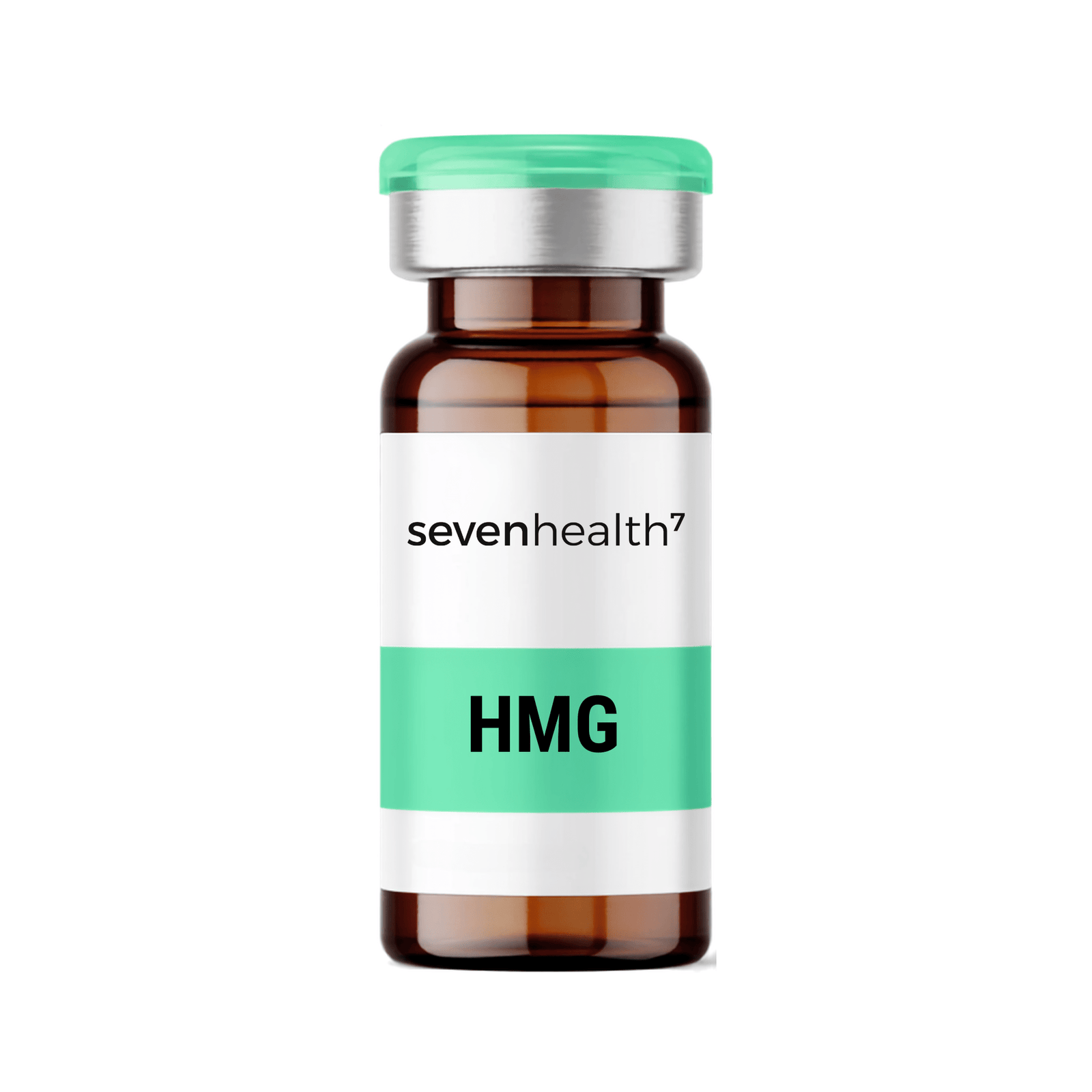
HMG 3-Month Membership Program

$1,050.00

4.9 Avg. Rating

1000+ Reviews

HMG, short for human menopausal gonadotropin, is a hormone therapy that many patients ask about when they’re working through fertility challenges. Because it combines two important reproductive hormones in one preparation, it’s often part of the conversation for both men and women exploring fertility support with a medical provider.
HMG contains two hormones your body already produces naturally: follicle-stimulating hormone, or FSH, and luteinizing hormone, or LH. These two hormones work together as part of your body’s core reproductive hormone system. In women, they help guide the development of ovarian follicles and the release of a mature egg. In men, they support both testosterone production and sperm development.
Patients commonly ask about HMG because it offers both hormones in a single preparation, addressing more than one part of the reproductive hormone system at once. This is different from therapies that supply only one of these hormones, which is why HMG is often discussed for patients who need more comprehensive support of the reproductive hormone pathway rather than a single, targeted piece of it.
HMG has a long history of use in reproductive medicine and carries an FDA-approved use for fertility treatment, which sets it apart from some of the newer, less established peptides discussed elsewhere on this site. As always, a licensed provider can help determine whether HMG fits your specific fertility or hormone health goals.
To understand how HMG works, picture your reproductive system like a garden that needs two different kinds of care to grow properly: one hormone that helps things develop and mature, and another that triggers the final, important step. FSH is like the hormone that supports the steady growth and development of ovarian follicles in women or supports sperm development in men. LH is more like the hormone that triggers a key event, prompting the release of a mature egg in women or signaling the testes to produce testosterone in men. HMG provides both of these natural hormone signals together, in roughly equal amounts, because it’s extracted and purified from a natural source containing both. By supplying both signals at once, HMG can support the reproductive system more comprehensively than a therapy that provides only FSH or only LH-like activity. This dual-hormone approach is part of why HMG has remained a relevant option in fertility treatment even as newer, lab-made versions of individual hormones have become available. For some patients and some situations, having both hormone signals present together offers a more complete way of supporting the reproductive process.
  • May help support follicle development in women undergoing fertility treatment, by providing FSH activity needed for egg maturation
  • May help support ovulation by providing LH-like activity alongside FSH, working together as part of a fertility treatment plan
  • May help support sperm production in men with certain forms of hypogonadotropic hypogonadism, by supplying both FSH and LH-like signals
  • Is commonly used to support assisted reproductive technology protocols, including in vitro fertilization
  • Has shown promise in research as a comparably effective option to single-hormone preparations in several fertility treatment settings
Individual results vary, and HMG should be used as part of an individualized fertility or hormone treatment plan developed with your provider.
Patients who commonly ask about HMG include those interested in:
  • Fertility support, particularly women undergoing ovulation induction or assisted reproductive technology, and men with certain forms of hormone-related infertility
  • Reproductive hormone support, for men with hypogonadotropic hypogonadism who need both FSH and LH-like signaling restored
  • Wellness optimization, for patients working with a fertility specialist or provider on a broader reproductive health plan
HMG is not appropriate for everyone, and its use should always be guided by a thorough fertility or hormone evaluation. Your provider will determine whether HMG, alone or alongside other fertility medications, is the right approach for your specific situation.
HMG has one of the longer track records among the hormone-based therapies discussed on this site, with an established, FDA-approved role in fertility treatment for both ovulation induction and assisted reproductive technology protocols like IVF. Multiple clinical studies have compared HMG to newer, single-hormone recombinant FSH preparations, generally finding comparable pregnancy rates between the two approaches in many treatment settings. Some research has suggested potential differences between HMG and FSH-only preparations in specific situations, such as women with polycystic ovarian syndrome, where certain studies have found HMG associated with a lower rate of ovarian hyperstimulation syndrome, a possible complication of fertility treatment. In men, research supports the use of gonadotropin therapy, including HMG, for restoring fertility in specific forms of hypogonadism, often used in combination with other treatments like HCG. It’s important to be transparent that the optimal choice between HMG and other gonadotropin preparations can depend on the specific fertility protocol being used, and this is a decision best made with a fertility specialist familiar with your full treatment plan. As with any fertility therapy, individual responses vary, and ongoing monitoring is an essential part of using HMG safely and effectively.
HMG is generally well tolerated, but like any hormone therapy, it carries potential side effects and is not appropriate for every patient. In women, potential effects can include bloating, mood changes, and in some cases, ovarian hyperstimulation syndrome, a condition that requires careful monitoring during fertility treatment. In men, reported effects can include breast tenderness or enlargement and mood changes. Because HMG affects hormone levels that influence multiple body systems, it requires careful, individualized monitoring throughout treatment. Patients with certain hormone-sensitive conditions, or specific ovarian or pituitary conditions, may not be appropriate candidates. This is not a complete list of contraindications, and only a licensed provider reviewing your full medical history and labs can determine whether HMG is a safe and appropriate option for you. Ongoing medical supervision, including regular lab work and, for women undergoing fertility treatment, monitoring such as ultrasound, is an essential part of using HMG safely. Following your prescribed dosing and treatment schedule closely, and communicating with your provider about any side effects, are important parts of your care.

What does HMG do?

HMG provides two natural reproductive hormones, FSH and LH, together in one preparation, to support follicle development, ovulation, or sperm production, depending on the patient’s specific treatment goals.

Is HMG FDA-approved?

Yes. HMG carries FDA approval for fertility treatment, including ovulation induction and assisted reproductive technology protocols.

How long before I may notice changes?

In fertility treatment, HMG is typically used within a structured treatment cycle, and your provider will monitor your response through lab work and other testing throughout that cycle.

Is it an injection?

Yes, HMG is typically administered as an injection according to a specific protocol determined by your fertility provider.

Can it be combined with other peptides or medications?

Yes, HMG is often used alongside other fertility medications, such as HCG, as part of a coordinated treatment protocol. This should always be guided by your provider.

Can it be combined with GLP-1 medications?

This should be discussed individually with your provider, particularly in the context of a fertility treatment plan, where careful coordination matters.

Will I need lab work?

Yes. Lab work and, in many cases, monitoring such as ultrasound are essential parts of using HMG safely and effectively during a treatment cycle.

Who should avoid this peptide?

Patients with certain hormone-sensitive conditions or specific ovarian or pituitary conditions may not be appropriate candidates. A full medical evaluation will help determine this.

How long do patients typically remain on therapy?

HMG is typically used within a defined treatment cycle rather than as an ongoing, indefinite therapy, and your provider will outline the specific timeline for your situation.

Is a consultation required?

Yes. A telehealth consultation with a licensed medical provider is required before starting HMG or any peptide therapy at SevenHealth.
Every peptide treatment program at SevenHealth is built around comprehensive, individualized medical care. When you begin therapy, your program includes:
  • An initial telehealth medical history and comprehensive evaluation with a licensed medical provider
  • Review of previous laboratory results when available, or recommendations for laboratory testing when medically appropriate
  • Personalized treatment recommendations based on your medical history and goals
  • Three months of prescribed peptide therapy when medically appropriate
  • A customized dosing and titration schedule specific to your prescribed peptide
  • A comprehensive follow-up appointment approximately three months after starting treatment
  • Review of progress, discussion of results, treatment adjustments if medically appropriate, and continued provider guidance
  • Ongoing provider oversight throughout your treatment program
  • No additional fees for appointments included within the treatment program
  • No additional fees for laboratory review as part of your treatment
Our goal is to make your experience with peptide therapy simple, transparent, and medically supervised from your very first consultation through every follow-up appointment. You will always know what to expect, what you’re paying for, and who to reach out to with questions along the way.
Patients choose SevenHealth because we focus on individualized, medically supervised care rather than one-size-fits-all protocols. Every treatment plan is built around your specific health history and goals, and every prescription is overseen by a licensed medical provider from start to finish. We work with FDA-registered 503A U.S. compounding pharmacies that follow applicable quality standards, so you can feel confident in the source and handling of your prescribed peptide therapy. Dosing is guided by your provider, not guesswork, and every program includes a three-month follow-up to review your progress and make adjustments if needed. We also believe in transparent pricing. There are no surprise appointment fees or lab review fees hidden within your treatment program, so you always know what you’re paying for.
  • HMG combines two natural reproductive hormones, FSH and LH, in one preparation.
  • It carries FDA approval for fertility treatment, including ovulation induction and assisted reproductive technology.
  • Research shows comparable pregnancy rates to single-hormone preparations in many treatment settings, with some evidence of a lower OHSS risk in certain patient groups.
  • In men, HMG can support sperm production when combined with other gonadotropin therapies like HCG.
  • Potential side effects vary by patient and may include bloating, mood changes, or, in fertility treatment, ovarian hyperstimulation syndrome.
  • Ongoing lab work and monitoring are essential parts of safe, effective HMG treatment.
  • HMG is typically used within a defined treatment cycle rather than as an ongoing therapy.
  • SevenHealth includes an initial evaluation, personalized dosing, lab review, and a three-month follow-up in every treatment program.

Educational Disclaimer

This information is provided for educational purposes only and is not intended to diagnose, treat, cure, or prevent any disease. Peptide therapy should only be used under the supervision of a licensed healthcare provider after an appropriate medical evaluation. Individual results may vary.

$100 OFF GLP-1 Injectable Plans for New Members ! CODE: