Close
Close

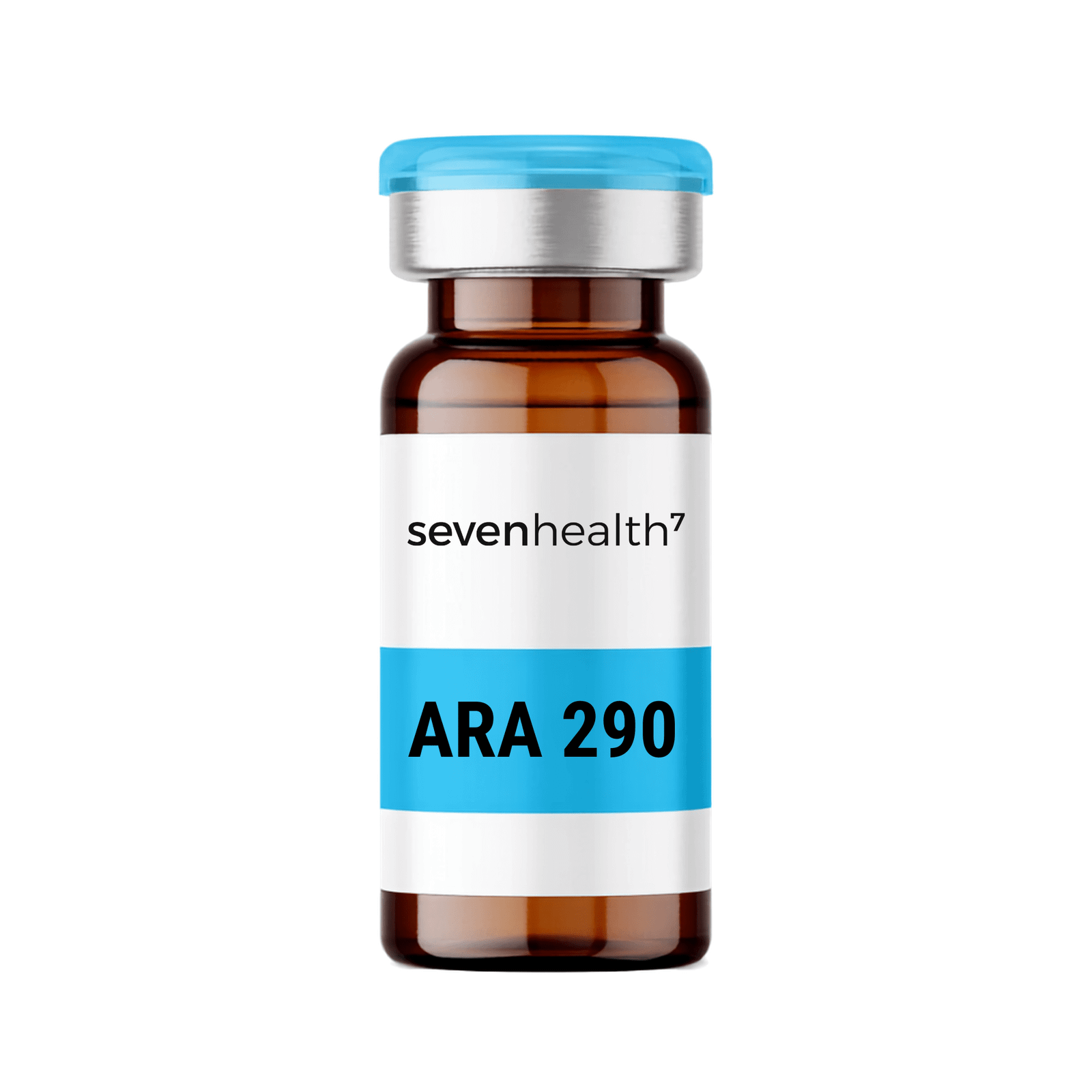
ARA 290 3-Month Membership Program

$1,050.00

4.9 Avg. Rating

1000+ Reviews

ARA 290, also known by the research name cibinetide, is a peptide that comes up in conversations about nerve-related discomfort, particularly for patients who haven’t found relief through more common approaches. Because chronic nerve-related discomfort can be difficult to manage, patients often want an honest explanation of what the research on ARA 290 actually shows.
ARA 290 was specifically designed by researchers who took a closer look at a well-known natural hormone called erythropoietin, or EPO, which your body uses primarily to stimulate red blood cell production. Researchers discovered that one specific part of the EPO molecule’s structure seemed to be responsible for a completely different function: helping protect and support stressed or injured tissue, separate from its blood-cell-boosting effects. ARA 290 was engineered to isolate just that tissue-protective portion, without the effects on red blood cell production.
Patients commonly ask about ARA 290 because this design gives it a distinctive angle: rather than working like a typical pain medication, it’s studied for its potential role in calming inflammation and supporting nerve repair processes in tissue that has been damaged or stressed. This has made it a compound of interest in research specifically related to certain types of nerve-related discomfort.
It’s important for patients to understand that ARA 290 remains an investigational compound. It has been studied in clinical trials and received special regulatory recognition for a specific rare condition, but it does not currently carry full FDA approval, and its formal drug development process has not been completed.
To understand how ARA 290 works, picture your body’s response to nerve injury like an overreacting alarm system that keeps sounding even after the initial threat has passed, driven partly by ongoing inflammation around the injured nerve. Rather than simply muting the alarm the way a typical pain reliever might, ARA 290 is studied for its ability to work directly with the underlying inflammatory and repair processes involved. ARA 290 does this by interacting with what researchers call an “innate repair receptor,” a specific target found on cells involved in inflammation and tissue repair. Think of this receptor like a switch that, when activated, tells inflammatory cells to calm down and tells the surrounding tissue to begin its natural repair process. Because ARA 290 was designed to activate this specific repair switch without also activating the separate switch responsible for red blood cell production, it’s able to pursue this repair-focused effect without the blood-related effects associated with EPO itself. This distinctive design is part of why ARA 290 has drawn research interest specifically in conditions where ongoing nerve inflammation and impaired nerve repair are believed to play a central role in the discomfort a person experiences.
  • Has shown promise in research for supporting relief from certain types of nerve-related discomfort, particularly in small clinical studies involving specific conditions
  • Is currently being studied for its potential role in supporting nerve fiber regeneration, based on findings related to nerve density measures in some human trials
  • May help support the body’s natural tissue repair and anti-inflammatory processes at the site of nerve stress or injury
  • Has demonstrated a favorable safety profile in the clinical studies conducted so far, without some of the effects associated with related compounds like EPO
Because ARA 290’s formal drug development and larger confirmatory trials have not been completed, these potential benefits should be understood as genuinely promising but not yet fully established outcomes.
Patients who commonly ask about ARA 290 include those interested in:
  • Nerve-related discomfort support, particularly patients dealing with certain nerve-related conditions who haven’t had success with other approaches
  • Wellness optimization, for patients working with a provider on a broader plan addressing nerve health and comfort
  • Research-informed care, for patients interested in exploring compounds with genuine, though still developing, human clinical trial data
ARA 290 is not appropriate for everyone, and given its investigational status, it should never be started without a proper medical evaluation and a realistic conversation about what the current evidence does and doesn’t show.
ARA 290 has a research history that includes both animal studies and human clinical trials, which sets it apart from many peptides that have only been studied in laboratory or animal settings. Animal research demonstrated that ARA 290 could reduce certain measures of nerve-related discomfort over an extended period following nerve injury, along with effects on the inflammatory cells involved in that response. In humans, ARA 290 has been studied in clinical trials for a specific type of nerve-related discomfort associated with a rare inflammatory condition. These trials found that a specific dose was associated with an increase in measures of small nerve fiber regeneration and improvements in certain symptom scores, although in at least one trial, discomfort itself did not separate clearly from placebo. Researchers involved in this research reported that no significant safety concerns emerged in the patients and volunteers studied. It’s important to be transparent that ARA 290’s formal drug development process was granted special regulatory recognition for this specific rare condition, but has not progressed to full FDA approval, and public development activity slowed after some of this early research was completed. This means that while the early science is described by some researchers as unusually clean and promising, ARA 290 should be understood as a compound that stalled in its development pathway rather than one that failed outright, and the current state of ongoing research and availability should always be confirmed with your provider.
Available human research on ARA 290 has generally reported no significant safety concerns among the patients and volunteers studied, which is a genuinely reassuring aspect of its research profile compared to some other peptides with more limited human data. That said, because larger confirmatory trials have not been completed, the full safety picture, especially for long-term or widespread use, remains less established than for approved medications. Because ARA 290 remains an investigational compound, it requires a particularly thorough and honest conversation with your provider before starting. Patients with certain active health conditions may not be appropriate candidates, and only a licensed provider reviewing your full medical history can help you understand whether this is a reasonable option to explore. Ongoing medical supervision is especially important given the investigational status of this compound. Patients should never source or use ARA 290 outside of a properly supervised medical relationship.

What does ARA 290 do?

ARA 290 is studied for its potential role in calming inflammation and supporting nerve repair in tissue affected by certain types of nerve-related discomfort.

Is ARA 290 FDA-approved?

No. ARA 290 does not currently have FDA approval. It received special regulatory recognition for a specific rare condition, but its broader drug development has not been completed.

How long before I may notice changes?

In clinical trials, effects on nerve fiber measures and symptom scores were assessed over several weeks to months, and individual responses vary considerably.

Is it an injection?

Yes, in clinical research, ARA 290 has been administered as a subcutaneous injection.

Can it be combined with other peptides?

This should be discussed with your provider, who can evaluate your full treatment plan and goals.

Can it be combined with GLP-1 medications?

This is not a well-studied combination, and should be discussed individually and carefully with your provider.

Will I need lab work?

Your provider may recommend baseline evaluation as part of a thorough, individualized approach to this peptide.

Who should avoid this peptide?

Patients with certain active health conditions may not be appropriate candidates. A full medical evaluation will help determine this.

How long do patients typically remain on therapy?

Because ARA 290 remains an investigational compound, treatment plans should be individualized and closely supervised rather than open-ended.

Is a consultation required?

Yes. A telehealth consultation with a licensed medical provider is required before starting ARA 290 or any peptide therapy at SevenHealth.
Every peptide treatment program at SevenHealth is built around comprehensive, individualized medical care. When you begin therapy, your program includes:
  • An initial telehealth medical history and comprehensive evaluation with a licensed medical provider
  • Review of previous laboratory results when available, or recommendations for laboratory testing when medically appropriate
  • Personalized treatment recommendations based on your medical history and goals
  • Three months of prescribed peptide therapy when medically appropriate
  • A customized dosing and titration schedule specific to your prescribed peptide
  • A comprehensive follow-up appointment approximately three months after starting treatment
  • Review of progress, discussion of results, treatment adjustments if medically appropriate, and continued provider guidance
  • Ongoing provider oversight throughout your treatment program
  • No additional fees for appointments included within the treatment program
  • No additional fees for laboratory review as part of your treatment
Our goal is to make your experience with peptide therapy simple, transparent, and medically supervised from your very first consultation through every follow-up appointment. Given the investigational status of ARA 290, your provider will place particular emphasis on honest conversation about realistic expectations.
Patients choose SevenHealth because we focus on individualized, medically supervised care rather than one-size-fits-all protocols. Every treatment plan is built around your specific health history and goals, and every prescription is overseen by a licensed medical provider from start to finish. We work with FDA-registered 503A U.S. compounding pharmacies that follow applicable quality standards, so you can feel confident in the source and handling of your prescribed peptide therapy, to the extent current regulations allow. Dosing is guided by your provider, not guesswork, and every program includes a three-month follow-up to review your progress and make adjustments if needed. We also believe in transparent pricing and honest education. There are no surprise appointment fees or lab review fees hidden within your treatment program, and we believe patients deserve an accurate picture of where the science currently stands.
  • ARA 290 (cibinetide) is a peptide engineered from a tissue-protective portion of erythropoietin, without the blood-cell-boosting effects.
  • It’s studied for its potential role in calming nerve-related inflammation and supporting nerve fiber repair.
  • Human clinical trials have shown promising findings on nerve fiber regeneration measures, though discomfort scores did not always separate from placebo.
  • ARA 290 received special regulatory recognition for a specific rare condition but does not currently have full FDA approval.
  • Available safety data has been reassuring, though larger confirmatory trials have not been completed.
  • This compound remains investigational and requires a particularly honest conversation with your provider.
  • SevenHealth includes an initial evaluation, personalized dosing, lab review, and a three-month follow-up in every treatment program.
  • Current availability and research status should always be confirmed directly with your provider.

Educational Disclaimer

This information is provided for educational purposes only and is not intended to diagnose, treat, cure, or prevent any disease. Peptide therapy should only be used under the supervision of a licensed healthcare provider after an appropriate medical evaluation. Individual results may vary.

$100 OFF GLP-1 Injectable Plans for New Members ! CODE: